
Project Management Pays Off – Even for Small Agencies
Plannable projects, structured processes, and no crunch time before delivery – for smaller companies and agencies, this is often more of a dream than reality. Yet many still shy away from investing in their own project management. In this blog, we explain why this step is not only worthwhile but essential for scaling your business.
This scenario is all too familiar, especially for young companies: the project pipeline is well-filled, and the team is constantly at its limit. One deadline follows another, the only developer on the team is working on three websites simultaneously, and the design department is running on fumes. Because everything needs to be done quickly, everyone in the team communicates directly with clients to get input and feedback for their tasks. The sales manager makes changes to the website himself because the developer has no time. Meanwhile, the developer has to find free stock photos for the new landing page because the designer is on vacation, and no one realized that CI-compliant images were still needed.
This is how everyday life looks in many young agencies. Processes are missing, responsibilities are not fully clarified, and with multiple client contacts, information is regularly lost. Due to time constraints, no one even dreams of Lessons Learned meetings anymore.
How do you solve this problem? Companies themselves know the answer: a functioning project management system is needed. However, many shy away from this step: addressing acute problems, searching for an additional developer or art director seems more appealing than investing in a purely administrative position. Team members just need to plan a bit better and communicate more – then it will work without a project manager. Right?

The Digital Project Manager – A Jack of All Trades?
To give you the answer upfront: No, it's unfortunately not that simple. Especially in digital projects, the demands on project managers are enormous, requiring an incredibly broad skill set, ranging from coordination talent and diplomatic demeanor to pragmatic goal focus and creative problem-solving. Let's take a look at the challenges digital project managers face and the skills they need – then you can ask yourself if you want to burden your team with this "on the side".
Tight Schedules
Firstly, service projects are generally much more short-lived than in other industries (see figure) – this is even more true for digital projects. Typically, this means: instead of a few long-term projects, many short ones need to be conducted. For the project manager, this means: frequently changing and diverse team configurations that need to be coordinated more or less simultaneously. Projects must be planned, executed, and neatly completed in a short time, almost always running in parallel.
Additionally, project requirements can often change rapidly. Deadlines are often tight, or parallel projects interfere. In short: regulated project phases or even sprints like in software development are simply not feasible.
Diverse Teams
The teams themselves also require a delicate touch: unlike project work in corporations, young companies and agencies often work with flat hierarchies. Project managers often do not lead their teams disciplinarily, meaning they have no authority. They must therefore rely particularly on diplomatic skills to coordinate work within the team and resolve issues.
Broad Range of Tasks
In the digital world, project managers often use agile methods like Scrum. However, due to organizational and resource reasons, they often take on tasks that combine the responsibilities of the Product Owner and Scrum Master: it is not uncommon for digital project managers to have to ensure that the team can work undisturbed, in addition to planning, budgeting, and resource allocation – and then also be responsible for client communication in all project phases.
This means that the project manager must both advise in early project phases to align client expectations with what is feasible and take responsibility for the outcome in front of the client in later phases. This requires the project manager to have enough basic knowledge from all departments to assess feasibility and understand solutions and technologies.
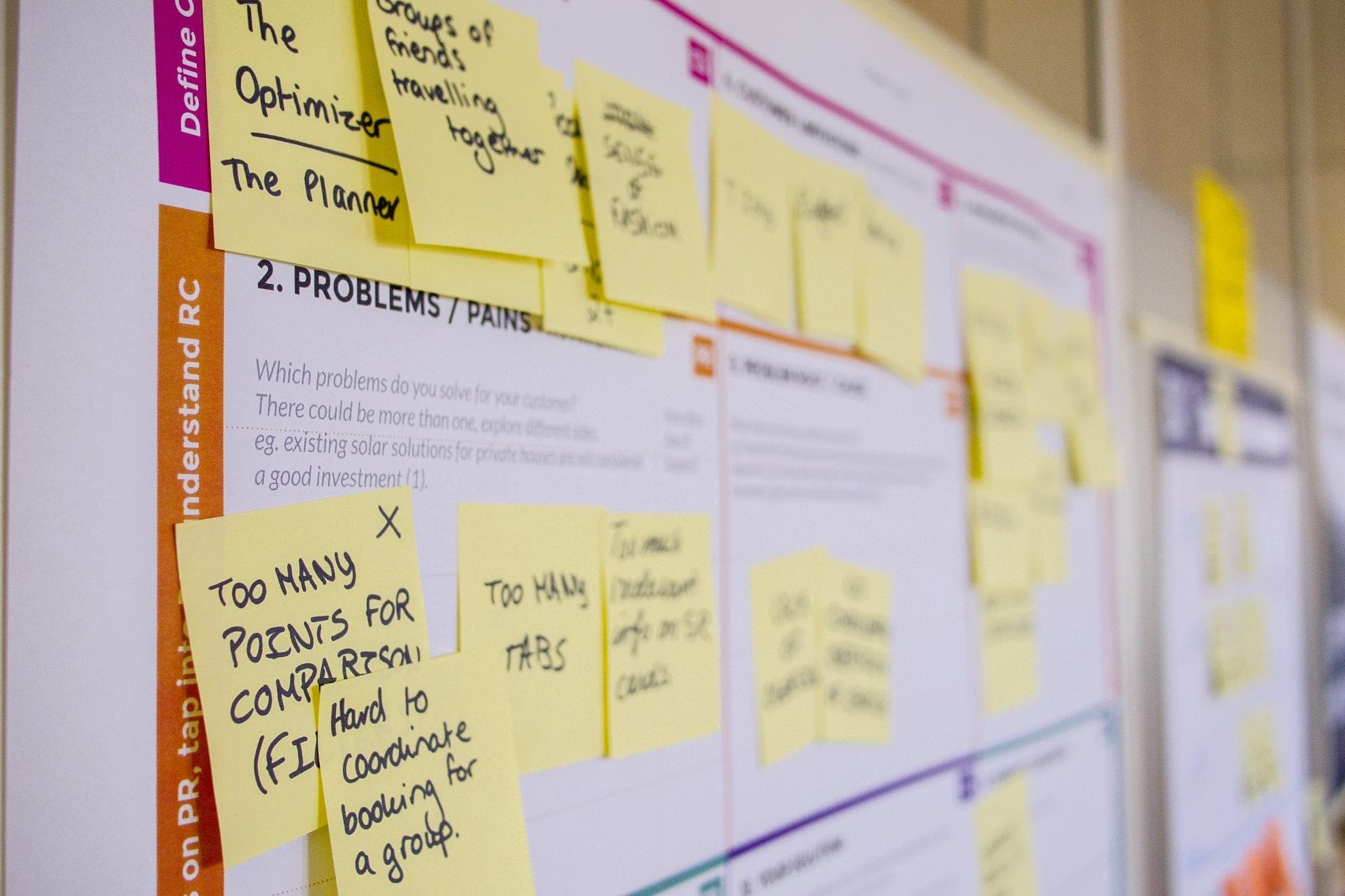
This ability to think into the various areas of a company is certainly one of the most important qualities of project managers who need to lead their versatile teams to good solutions in companies with flat hierarchies under often tight deadlines. While it is important for the designer to be deeply involved in their subject, it is much more important for the project manager to have an overview of the activities of the designer, developer, sales manager, or social media manager. This way, they know the specific requirements of each area and can manage expectations, resolve problems, and effectively mediate between different positions in the team.
Instagram, Facebook & Co. – How Companies Become Successful on Social Media
In addition to this multitude of specific challenges, the digital project manager must also handle classic project management tasks: time and budget planning, clear briefings, or success control are also important tasks in digital project management. The fast-paced nature of digital projects requires quick capture and implementation of learnings. Project observation and evaluation are almost constant to-dos in agencies and media companies.
Sure, it is possible that a team member who is not a project manager might happen to have this skill set. However, it is very difficult for someone without clear project management responsibility to balance between their actual area of work and project coordination. Half-heartedly implemented project management often creates more chaos than it can eliminate.
From Small to Large
As impressive as this all sounds: a project manager does not actively work on my product. Why shouldn't I just hire another developer?
In the short term, this solution is certainly conceivable. The idea of hiring someone who can directly contribute instead of a purely coordinating team member is appealing. However, it does not address the root causes of the aforementioned problems. Another developer might temporarily relieve the existing one. But as soon as the project volume increases or unforeseen complications arise, the new employee will also be distracted from their actual task by planning and coordination tasks, likely outside their area of expertise.
However, if someone ensures that projects become more plannable, measurable, and structured, it automatically relieves all involved team members – who can now fully concentrate on their core tasks again. This reduces the likelihood of errors in work results and increases the quality of performance. Clear responsibilities greatly aid team organization and communication.

Deadlines can also be better met, as they can be more accurately set or, in an emergency, rescheduled early and in consultation with the client. Your clients will also appreciate the structured approach, the consistent point of contact, and the timely delivery of flawless work.
Office 4.0 – Why Changed Work Environments Demand a New Visual Language
You won't achieve these advantages by hiring one or even ten new developers if you don't have processes and, above all, a team member responsible for coordinating project teams. Without clean project planning and observation, including subsequent evaluation, every project essentially starts from zero. You cannot learn from past mistakes if experiences from previous projects do not flow into the next one.
Certainly: having your own project management, including the introduction of corresponding processes and tools, costs time, money, and personnel effort. The path there will hardly be a linear sprint to the finish line. However, we can also say from our own experience that the efforts are more than worth it.
Project Management – Essential for Success
The combination of a broad skill set, organizational talent, and time-consuming multitasking across various activities makes project management a full-time job, especially in agencies with small teams, that cannot be done "on the side".
Having your own, functioning project management is an essential step towards automating and professionalizing your business. Instead of starting from scratch with each project and stumbling aimlessly towards the deadline, the entire team's work can be better overseen, coordinated, and streamlined in the long term. Scaling your business can only succeed if your resources can be planned and calculated. The only risk in introducing project management is not daring to do it.
YOUR PATH TO PERFECT PROJECT MANAGEMENT
Whether your company already engages in intensive project management or is just starting: We support you in all project phases, whether in an advisory capacity or in implementation.
Want to learn more? Click here.