
Instagram, Facebook & Co. – How Companies Become Successful on Social Media
The team meets on Friday afternoon in the meeting room, all weekly tasks are completed, and the team is looking forward to the weekend. Too soon to celebrate. The CEO pulls one last surprise out of the bag: "People, it's time: We finally need to be on Instagram! By the end of the year, I want to see 10,000 followers." The anticipation crumbles to dust, replaced by nervous pen clicking. A brave voice speaks up: "Boss, that's not how it works." Not without a concept. Here you will learn which six steps have proven themselves in our agency's daily routine when planning a social media presence.
She's right, the brave voice from the back row, because that's really not how a company's social media presence works. Many first ask themselves which social media platform they should be on and take the answer as the basis for every further step. But this is putting the cart before the horse, as the selection of the right platform can only be targeted if it is preceded by extensive analysis and a coherent concept. So the rule is: concept first – platform later.
However, since endless planning and conceptualizing is just as inefficient as blindly "getting started", we want to show how activism and methodical approaches can be profitably combined in the field of social media. For us, the following steps have proven effective in our agency's daily routine:
6 Steps to a Social Media Strategy
1. Analyze the Current State
The indispensable first step: visualize the current state of the company. Marketing tools like the SWOT analysis can be useful here, helping to identify the strengths, weaknesses, opportunities, and threats of a company in a matrix.
This also crystallizes who or what your company actually is, what it stands for, and what message it conveys. You can work with this current state – either by reinforcing it or by taking a new path from now on.
Do not underestimate the importance of looking left and right at competitors in your own industry. This way, you can develop a sense of what is possible and how your company can stand out from the competition.
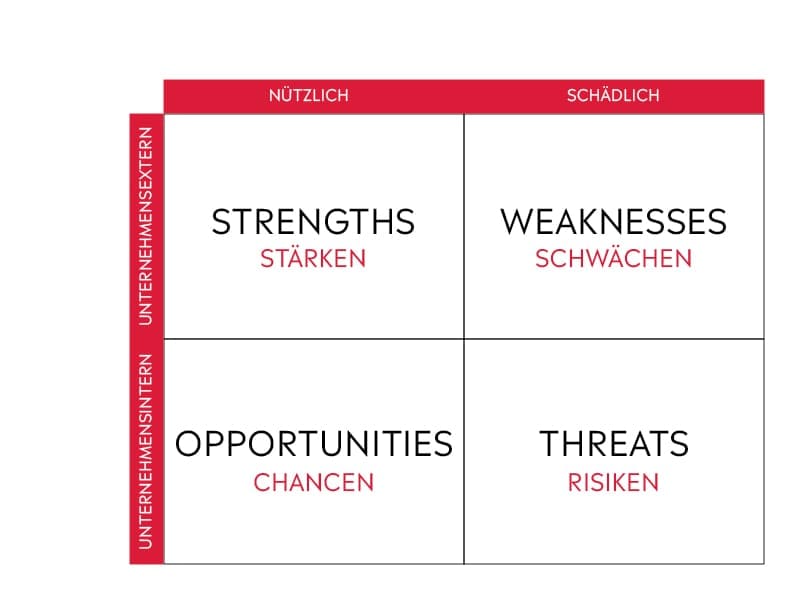
The SWOT analysis is considered a classic in marketing. Source: Medienstürmer
2. Define Target Group(s)
No matter which media are used in marketing, one function is always central: conveying a product/company message to relevant target groups. And these need to be defined now.
The following questions can help:
What stage of life is your target group in?
How, where, and when do they consume media?
Photo, video, audio, or text – what does the target group prefer?
What motivates your target group to buy?
What motto does your target group live by?
The method of personas is particularly effective. Here, you describe a specific and fictional person for each target group, representing the entire group.
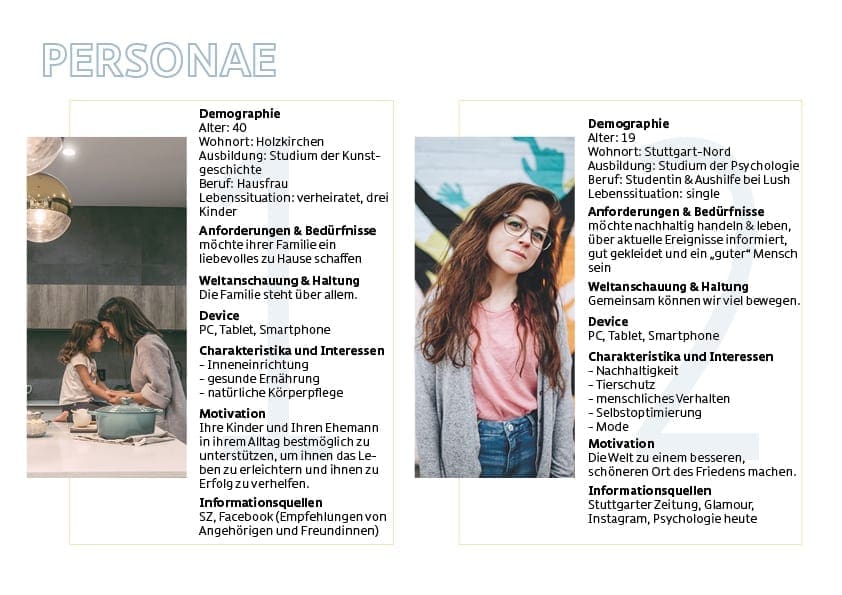
This template can be used for persona creation, which is particularly helpful in defining target groups. Source: unsplash.com
3. DESCRIBE Goals
Before starting, it must be clear what goals you are pursuing with the social media presence. Primarily, it should not be about increasing sales. Social media presences are not short-term advertising measures – it's more about building a relationship with target groups. And just like in real life, a relationship only succeeds when trust, honesty, and authenticity are the focus.
Another reason for this approach: The original one-to-many communication, as it still occurs today in newspapers and magazines (i.e., from the editorial team to the readers), has transformed into a many-to-many communication in the context of digital brand presences. Specifically, this means especially in social media: Consumers become prosumers. They consume and produce simultaneously – sharing and reacting to content. And this, in turn, increases the reach of the creator.
Now it's time to get specific. What exactly do you want to achieve?
Increase brand awareness (and thus generate leads in the long term)
Spread relevant information/industry knowledge (and thus emphasize the professionalism of your own company)
Create a platform for individual and direct customer service (and thus increase customer satisfaction)
Engage in employer branding (and thus recruit new employees in the long term)
and much more.
Important: Always remember that each goal needs parameters by which you can measure success.

4. Content & TIMING
In the first step, you identified the strengths, weaknesses, opportunities, and threats of the company and what the overarching message should be. Combined with the interests and preferred media of the target group and the goals developed in the third step, the content emerges – the topics and content you bring to your target group(s) via social media channels.
In addition to the thematic focus, another factor is crucial: timing. The answer to the question of which days and at what time you should post initially comes from your target group analysis.
5. Finally: The Platform
First of all: The choice of platform is – you guessed it – determined by the target groups. Because, of course, Instagram is only a potential platform if the target group is also on Instagram.
Beyond that, there are many other reasons that speak for a channel on a particular platform. Here is an overview of the most important social media portals:

Photo, video, short texts, long texts, links: Facebook places hardly any limits on the formats in which content is packaged
Free account and affordable advertising
Leading in the number of monthly users

YouTube
Extensive storytelling possible
Higher search engine ranking
Opportunity to generate revenue through advertising in videos

Optimal for spreading concise information
Particularly popular among journalists
Tweets can "explode"
Usage and direct interaction are very straightforward and require little effort

Short-term relevant content can be broadcast live via Stories/Livestream (low quality requirement)
Aesthetic focus
Interaction rate very high

Direct linking to your own website/social media channels
-
[
Users are particularly eager to spend](https://www.businessinsider.com/pinterest-is-worth-2-billion-because-its-25-million-users-are-rich-female-and-like-to-spend-2013-2?IR=T#ixzz3SZ12i6gi)
Often targeted search for products/information, i.e., open to content, no matter which company it comes from

Can present long, editorial content attractively
Professional framework, therefore particularly suitable for B2B and employer branding
Internationally popular

Make new business contacts
Geographic focus on DACH
6. Optimize, Optimize, Optimize
Essential in developing a social media strategy is the realization that not everything can be strategically planned. Once you are active on social media channels, you can and must use metrics such as reactions, likes, comments, and new followers, or even analysis tools, to observe which posts are particularly well received – and thus continuously optimize the thematic focus and timing.
Summary
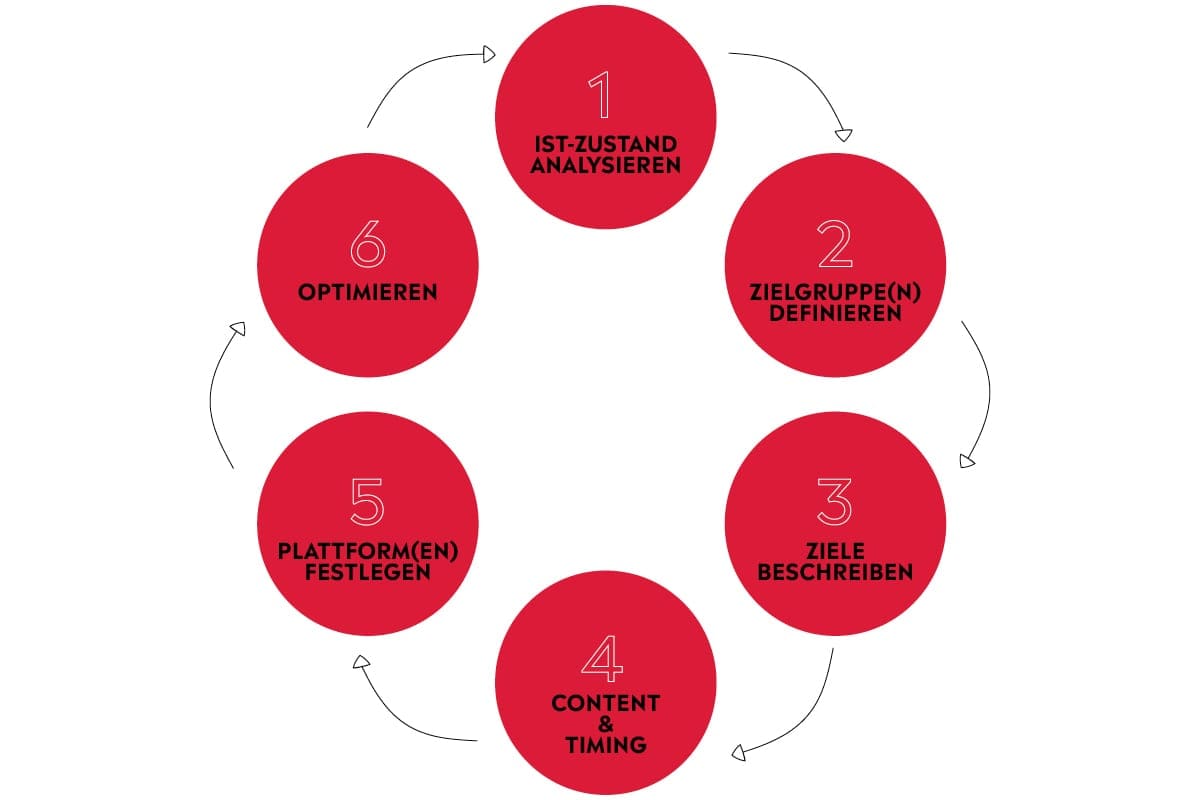
The graphic symbolizes: Creating a social media strategy is a continuous process. Source: Medienstürmer